My Articles in Hops Magazine

 
In 2011 I had the opportunity to write two articles for the fall issue of Hops Magazine, an English-language quarterly serving mainly the residents of Shanghai and Beijing. Hops describes itself as “the only magazine in China dedicated exclusively to beer culture. We strive to provide in depth and accurate coverage of the evolving beer market, including venues and events, the professional marketplace and the science of brewing.”

Cooking with Beer: Beer-battered Shrimp Tacos

For those interested in learning how to cook with beer, you’re in luck! For this article I wrote how to make beer-battered fish tacos using Tsingtao. For a link directly to the article, go here.

Now that summer is over and that bottle of Tsingtao is no longer a replacement for water, it’s time to find some other uses for that beer. Why not use it in some of your favorite recipes?

There are hundreds of recipes for breads, stews, soups and meats, which use beer of all types, ranging from hearty stouts to bitter ales. It’s not difficult to see how beer can be an integral part of any recipe with its range of possibilities.

The Blarney Stone: Authentically Irish

Irish Pubs are pub staples the world over. On a trip to Mongolia I took in 2010, the capital city of Ulaanbator boasted two Irish pubs, each claiming to be the original Mongolian Irish pub. Shanghai is no different with its maddening number of pubs and bars. However, the Blarney Stone appeared to be one of the more authentic of them and I had the opportunity to interview one of the owners for an article about the French Concession mainstay. For the full article, go here.

If you’re looking for a true Irish pub experience in Shanghai, the Blarney Stone is the place to go. The low ceilings, rustic knick-knacks, dark stained wood and ever-necessary Guinness make it the ideal Irish pub to spend after a day of hard work, and not only for its authentic environment. The patrons who pour into the pub in the evenings are regulars, knowing exactly what they want to drink and where they want to sit.

This rich atmosphere didn’t happen overnight. It’s taken years of dedication by its owner-managers, one of whom is Dave Kelly, a Dublin native, who came to Shanghai a decade ago to work.

Share
Posted in beer/brewing, blog, china | Tagged , , , | Leave a comment

Knock-off Culture Claims In-N-Out

As everybody knows, China is full of knock-offs. Intellectual Property is a mere suggestion to the way business is done here. Nothing is sacred. The culture of shanzhai (山寨) produces knock-offs resulting in the horrifying (fake beef), the poisonous (clenbuterol pork) or the weird (Huaxi Village, which knocks off famous cities, even Chinees ones).

One of the more extreme examples recently was the discovery of knock-off toilet paper in Beijing:

The phony toilet paper, sold under the name of the major toilet paper brand Xue Zhu, contained visible chaff and its wrapping was flimsy. The quality of the fake toilet paper led many to question if it is actually hygienic at all.

This summer, the expat community was aflutter with the news that In-N-Out Burger might be coming to Shanghai after seeing an advertisement on the streets of the city:

from reddit

Calls to the company offices in California yielded information that the burger franchise (which hasn’t even expanded east of Colorado) is definitely not coming to China. It probably had something to do with their unwillingness to use fake beef. It was later discovered that the ad was evidence In-N-Out had merely fallen victim to the gorwing knock-off culture prevalent in China.

Caliburger, as the knock-off is called, was started by Americans who want to bring the taste of the West to the east. They plan expand to through China to Korea and Russia as well. They’ve “copyrighted” Double-Double, Animal Style and the motto, “Quality You Can Taste” in several countries outside the United States and their website implies they plan to copy the famous red and white tiled color scheme of the original.

The menu looks nearly identical to that of the real In-N-Out with prices a bit higher than that of the actual In-N-Out.  One major difference  is the availability of alcohol. California wine and bourbon-laced milkshakes, which would be an anathema to scripture-laden paper cups of the original, are slated to be sold.

In a breathless interview with Shanghai Talk Magazine the CaliBurger team said they “innovate” the In-N-Out burger by copying it:

Our goal is to actually have an innovative – I don’t wanna say better – product that will be inspired by In-N-Out, but there’s some originality and innovation on how they’re made and offered.

However, the real In-N-Out did make a stopover to Shanghai this week to conduct “soft market research” by bringing beef, cooks and other essentials for a one-off tasting:

Sasha’s leased out its garden to a predominant PR company strictly for invited guests, local and western media and the such like for the purposes of In n Out to “soft market research” the In N Out brand.

Photos of the event can be found at SeriousEats.

Knock-offs will likely continue to happen, even despite serious objections of foreign companies and claims by the Chinese government of severe crackdowns.

This particular shanazhai product will likely draw enough homesick West Coast Americans and curious passer-bys to keep it afloat and continue the vicious cycle. However, this writer hopes someone will soon find “inspiration” from Chipotle.

Share
Posted in china | Tagged , , , , , , , , | Leave a comment

Ken Jennings’ “Maphead”

It’s been a little while since I’ve written anything on this blog. However, I feel compelled to write something geography related after finishing Ken Jennings’ new book “Maphead: Charting the Wide, Weird World of Geography Wonks.” Yes, it’s that Ken Jennings, the one from “Jeopardy!”


“Maphead” is a fun, breezy book about the people who take the love of maps, or cartophilia, as Jennings calls it, to incredible levels.

It covers the world of map collecting, geocaching, road sign obsessive “roadgeeks,” National Geography Bee and nerdy world of fake map-makers.

The book has enough to please most non-cartophiles despite a few dry chapters and Jennings’ attempts to show off how smart he is to the reader every once in a while.


Share
Posted in blog, geography | Tagged , , , , , | Leave a comment

Summer’s Over

Port Barton, Palawan, Philippines


The dog days of summer are finally over. I can finally wear a jacket. It’s been a long, long time since I last updated.

However, I did get a chance to go to the Philippines, Suzhou and Hanghzou with a lot of friends. But now that I’m back at work with random bouts of downtime I should be able to keep this updated more often.

Share
Posted in china, travel | Tagged , , , , , | Leave a comment

Chinese Carousel of Progress

The Australian broadcasters SBS released a report of the purported Chinese real estate bubble. Throughout several parts of China, ghost towns and malls are cropping up. They aren’t like American ghost towns, but rather a government-backed attempt at rapid development in places nobody wants –or can afford– to live.

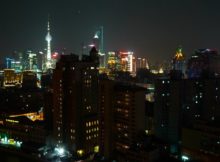
Just behind my apartment compound lies a shikumen waiting to be demolished. Convenience stores, noodle shops and apartments have been boarded up in the traditional Chinese community space since I moved to Shanghai several months ago. From what I can discern, the area was built in 1923, well before the Communist takeover of China. Bathrooms, sinks and kitchens are all shared and the living conditions are actually quite poor. Many of the buildings have fallen into disrepair and a view from my apartment on the 24th floor reveals that many buildings have their roofs missing or caved in while as many still live there.

View from my apartment

Buildings like these are a distinct part of Shanghai’s history. As China, and especially Shanghai, continues to develop, the government has tried to increase living conditions of its citizens. So, it’s no secret that the government would slate these building for demolition to eventually build something more profitable.

However, the problem is that people have spent several generations living in theses neighborhoods. When they are demolished, man will be forced to relocate elsewhere around the city of 23 million people. Most of the time they are sent to the suburban outskirts and that new flat patch of dirt is turned into an expensive apartment compound or shopping mall. As the SBS report showed, its former residents are assuredly unable to afford whatever will replace the shikumen. In fact, a recent report from the Chinese government revealed the number one cause for social unrest in the PRC is home demolition and forced relocation.

There are a few renovated shikumens still standing in the city, but they aren’t meant for living. Tourist and shopping areas like Xintiandi and Tianzifang have created idyllic shikumen enclaves laden with shops, cafes and restaurants to create a Disney park sort of feeling.

The next few months should be interesting as an area adjacent to my apartment complex (and dilapidated shikumen) has been under construction. I haven’t been living here long enough to know what was there before, but it was likely a large living space. Those who live next door have a glimpse into the future of what their homes will soon become.

There are some photos online of the construction site from the Embankment Building down the street (via MovingCities). The only information I can find about the construction site are signs along the road which read, OCT Suhe Creek. Some googling helped me find out it is actually an art space. However, I doubt the entire area will be an art space, as the land is simply too valuable. Only the steamroller that is progress will show us what’s next for .

Share
Posted in blog, china, geography | Tagged , , , , , , , , , , , , | Leave a comment

New site: Homebrew Shanghai


So, I started a new website: homebrewshanghai.com. Modeled after Rob Titley’s Homebrew Korea, I plan to create the same sort of community that helped me out during the trial-and-error periods of my own homebrewing in Korea. So far the site is just a splash page and a message, but it’s something nonetheless.

Shanghai’s –and to a larger sense, China too— is almost non-existent.  Korea’s homebrew scene practically looks like Portland, Oregon in comparison to China’s. It’s a difficult task to get supplies and equipment, but I felt that if some sort of online community existed, it might be easier to plant the proper seeds for a homebrewing scene in the city.

The site isn’t just for homebrewers, though. It’s also a place for beer lovers to talk about their favorite hideaway and find a one-of-a-kind beer hiding somewhere around the city.

Share
Posted in blog | Leave a comment

Marriage Market in People’s Park

So here’s a cultural oddity:

Every weekend in People’s Park hundreds of families come together and create a real-world dating site.

Traditionally, from what I’ve read, it’s a parent’s job to find a suitable spouse for a child. And with the one-child policy creating “little emperors,” it’s likely a more accelerated process.

So, parents post the age, height, education, job, salary and other qualifications (and sometimes a photo) of their children with the hope of getting a new member of the family down the road.

From my understanding children are not always willing participants in this sort of matchmaking.

Usually blind dates are setup after each family makes some sort of an agreement. It’s usually not just one blind date. Sometimes it can be a long, arduous affair.

I’m not certain on the effectiveness of this sort of matchmaking, but it’s nonetheless a very unique method for a Western onlooker.

For those trying to silence parental prodding there is the fake-marriage market, where lesbians find gay men to marry.

Share
Posted in blog, china, travel | Tagged , , | 1 Comment